Recognizing Survival Patterns: Why We React the Way We Do
- Mar 14
- 5 min read
Updated: May 16
Understanding emotional survival responses and how reflection can return us to sovereignty through the Ethical Navigation Cycle™.

Recognizing Survival Patterns
Many people have asked themselves a simple question after a difficult moment:
“Why did I react that way?”
In moments of anger, frustration, or emotional overwhelm, reactions can appear suddenly and intensely. These reactions are often not intentional choices but survival patterns—automatic responses shaped by past experiences and emotional conditioning.
Survival patterns develop as protective responses. They once helped individuals navigate challenging situations, protect themselves emotionally, or avoid further harm.
However, when these patterns activate in everyday interactions, they can lead to reactions that do not reflect a person’s true values or intentions.
Recognizing these patterns is the first step toward returning to sovereignty.
What Are Survival Patterns?
Survival patterns are automatic emotional responses that develop during earlier experiences when a person learned how to feel protected, safe, or emotionally stable.
Over time, the mind develops familiar ways of navigating difficult or emotionally intense situations. These responses once helped a person manage conflict, protect themselves, or maintain emotional balance.
Within the Serenity2Mindset™ framework, these survival responses are understood as Inner Navigation Modes™.
An Inner Navigation Mode™ describes the internal pattern or role a person may move into during moments of stress, disagreement, or emotional pressure. These modes represent different ways the mind has learned to navigate emotional situations.
For example, some individuals may move into Peacekeeper Mode, trying to maintain harmony and avoid conflict. Others may shift into Outspoken Mode, expressing themselves strongly when they feel misunderstood. In other situations, a person may move into Invisible Mode, withdrawing from the conversation to avoid tension.
Most people develop a default or favorite navigation mode over time because it once helped them feel protected or safe. However, people are not limited to only one mode. Depending on the situation, individuals may move between different Inner Navigation Modes™.
Recognizing which mode is active helps individuals understand where their reaction is coming from. This awareness creates the opportunity to pause and move through the Ethical Navigation Cycle™, allowing them to respond with greater clarity and intention.
Common Inner Navigation Modes™
Survival responses may appear through different Inner Navigation Modes™, such as:
• anger or defensiveness• emotional withdrawal• shutting down communication• attempting to control a situation• reacting quickly before reflection• agreeing with someone simply to keep the peace
Each of these responses once helped the individual feel protected or emotionally safe. When these patterns are recognized, individuals can begin navigating their emotions with awareness instead of reacting automatically.
Why Recognizing Survival Patterns Matters
When survival patterns remain unnoticed, emotional reactions can feel automatic and difficult to control.
In many situations, the emotional system reacts first, while the reflective mind struggles to catch up. This is why people sometimes respond in ways that surprise even themselves.
Recognizing survival patterns helps interrupt this automatic cycle.
When individuals become aware of the Inner Navigation Mode™ they are operating from, they gain the ability to pause and examine what their emotions may be signaling.
Instead of reacting immediately, they can begin to reflect.
This moment of reflection is important because it creates space between reaction and response.
Within the Serenity2Mindset™ framework, this pause is guided through the Ethical Navigation Cycle™, which helps individuals move from automatic survival responses toward thoughtful communication.
By recognizing survival patterns and understanding which Inner Navigation Mode™ may be active, individuals gain the awareness needed to navigate emotional situations with greater clarity, intention, and sovereignty.
From Survival Reaction to Ethical Navigation
Recognizing a survival pattern is the first step, but awareness alone does not change how we respond.
What matters next is how we choose to navigate the situation once the pattern is recognized.
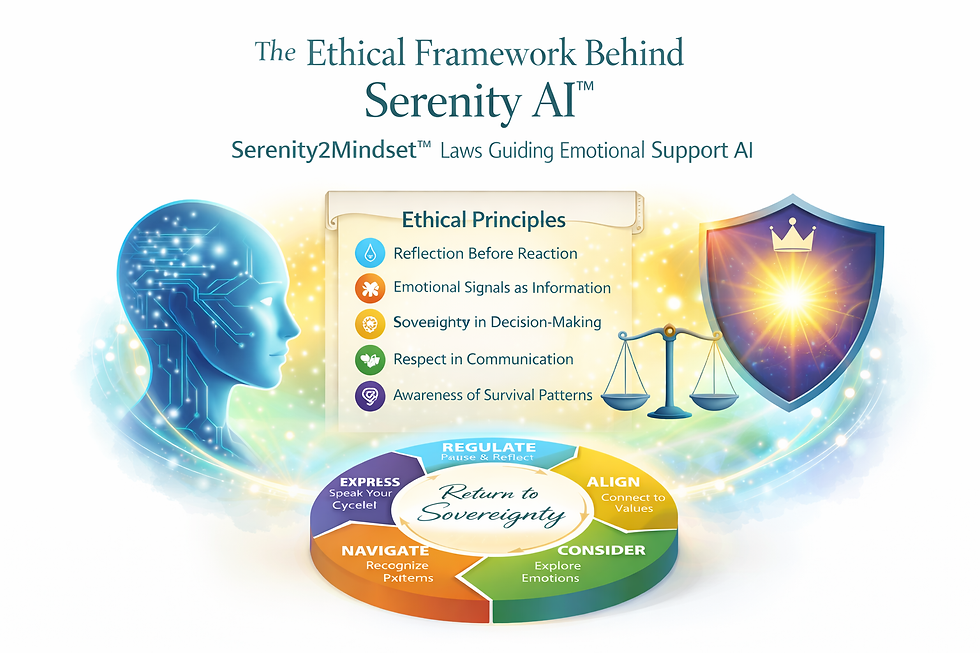
Within the Serenity2Mindset™ framework, this process is guided through the Ethical Navigation Cycle™.
The Ethical Navigation Cycle™ helps individuals pause emotional escalation and move through a structured reflection process before responding.
The cycle moves through five stages:
Regulate → Align → Consider → Navigate → Express
Each stage supports a different part of the reflective process.
RegulateCalm the body and reduce emotional intensity before responding.
AlignReconnect with personal values and the kind of communication you want to represent.
ConsiderReflect on the situation, the emotional signals present, and which Inner Navigation Mode™ may be influencing your reaction.
NavigateChoose the direction, tone, and balanced expression that aligns with your values.
ExpressCommunicate clearly, respectfully, and intentionally.
Through this process, individuals move from automatic survival reactions toward intentional and ethical communication.
Instead of reacting from habit, they learn to navigate emotional situations with awareness, clarity, and sovereignty.
Reflection with Serenity AI™
Within the Serenity2Mindset™ framework, reflection plays an important role in helping individuals pause before reacting.
Serenity AI™ was developed to support this reflective process by functioning as a reflection mirror.
Instead of immediately responding during moments of emotional intensity, individuals can take a moment to express their thoughts and explore what they may be feeling. This reflective space helps bring awareness to survival patterns and the Inner Navigation Modes™ that may be influencing the reaction.
Serenity AI™ does not replace human wisdom or decision-making. Instead, it creates a space where individuals can slow down, explore their thoughts, and recognize the emotional signals behind their reactions.
Through guided reflection, individuals can:
• express their thoughts openly• recognize survival patterns• identify the Inner Navigation Mode™ they may be navigating from• reflect on what their emotions may be signaling• prepare for thoughtful communication
By supporting reflection before reaction, Serenity AI™ helps individuals move more intentionally through the Ethical Navigation Cycle™.
This reflective pause allows people to return to their own clarity and navigate conversations with greater awareness, respect, and sovereignty.
Returning to Sovereignty
Recognizing survival patterns does not mean eliminating emotions or avoiding difficult conversations.
Instead, it allows individuals to understand what their emotions may be signaling and where their reactions are coming from.
When people begin to recognize the Inner Navigation Mode™ influencing their response, they gain the opportunity to pause and choose a different direction.
Through reflection and the Ethical Navigation Cycle™, emotional reactions can shift from automatic survival responses toward intentional communication.
This process does not remove emotion from the conversation. Rather, it helps individuals move through emotional moments with greater awareness, balance, and clarity.
Over time, this practice strengthens a person’s ability to respond rather than react.
Within the Serenity2Mindset™ framework, this is what it means to return to sovereignty — the ability to navigate emotional situations with self-awareness, thoughtful reflection, and intentional expression.
Sovereignty is not the absence of emotion.
It is the ability to move through emotional experiences with clarity, presence, and choice.
Many people search for answers to questions like “Why do I react so strongly?” or “Why do small things trigger big emotional reactions?” In many cases, these responses are connected to deeper emotional survival patterns that operate beneath our awareness.
This helps your article rank for searches like:
why do I react emotionally
emotional triggers
emotional reactions
why do small things upset me
Continue Exploring Serenity2Mindset™
If you would like to explore the Serenity2Mindset™ framework further, these articles explain how reflection and ethical navigation work together.
• The Ethical Navigation Cycle™ Explained
How reflection helps transform emotional reactions into thoughtful responses.
• The Serenity2Mindset™ Model
Understanding how survival patterns, reflection, and ethical navigation work together.
• What Is Serenity AI™
How AI can function as a reflection mirror within the Serenity2Mindset™ system.
• What Is Emotional Support AI
Exploring how AI tools can support reflection and emotional awareness.


Comments